

Utility strike prevention NZ is not a niche concern for specialist contractors, it is a live obligation for any person or business that breaks the ground in New Zealand. Under the Health and Safety at Work Act 2015, the duty to identify and manage the risk of underground service strikes sits with the PCBU before a single bucket of soil is moved.
In Auckland, where the concentration of power, water, gas, fibre, and telecoms infrastructure is among the highest in the country, that obligation carries real weight. Get it wrong and the consequences run from repair bills and project delays through to WorkSafe investigations, prosecution, and imprisonment for the most serious breaches.
This guide covers what those consequences look like, how utility strikes happen, what New Zealand’s Before U Dig protocols require, and why non-destructive digging is increasingly the standard of care for excavation near live services.
What Happens When You Strike a Utility
A utility strike Auckland is rarely just an inconvenience. The direct and indirect costs compound quickly, and in serious cases the financial exposure is the least of the problems.
Direct costs include the physical repair: the asset owner’s crew, materials, and make-safe work. For a low-voltage cable or a small water lateral, that might be several thousand dollars. For a high-voltage feeder, a gas main, or a fibre trunk line carrying multiple customers, repair costs escalate rapidly. The asset owner has the right to recover those costs from the party responsible for the damage under the Utilities Access Act.
Project delays are often more expensive than the repair itself. A struck high-voltage cable can take days to repair. A ruptured water main or gas line triggers an emergency response, a mandatory worksite shutdown, and an investigation before works can resume. Programme delays on fixed-price contracts translate directly into liquidated damages exposure.
Service disruption liability. In Auckland, the density of downstream users affected by a utility strike can be significant. A 2021 incident in Auckland, where a contractor cut through a high-voltage line while digging without checking utility plans, caused a widespread blackout. Utility providers and councils can and do pursue costs for consequential service disruption alongside direct repair costs.
WorkSafe investigation and HSWA liability. If something goes wrong, such as a burst gas pipe or cut power cable, the incident may be investigated by WorkSafe NZ, which can lead to penalties or prosecution. Offending under HSWA is a criminal offence and prosecutions may be brought by WorkSafe New Zealand if their investigation yields sufficient evidence of a breach. Sentences include fines, reparation orders, imprisonment, and orders for action such as undertaking training or giving an enforceable undertaking. For a PCBU that failed to establish the location of underground services before excavating, the defence position is weak.
Insurance consequences. A utility strike on your record affects your ability to obtain and renew professional indemnity and public liability cover. Insurers in the construction sector treat strike history as a material risk factor.
Why Strikes Happen: The Common Causes
Understanding the root causes of underground services location failures is the starting point for prevention. The pattern across documented incidents is consistent:
Failure to request service information before digging
Globally, not contacting a utility notification service before excavation is the single leading cause of underground utility strikes. In the US and Canada, the Common Ground Alliance reported 197,000 underground utility damages in 2024, with failure to notify before digging accounting for 26% of all incidents – the leading single cause. New Zealand’s Before U Dig system exists precisely to address this yet strikes still occur on sites where no request was made.
Relying on as-built plans without field verification
Service plans provided by asset owners show approximate locations based on historical this they are not survey-accurate. Undocumented or unmapped services are common, particularly private laterals, abandoned plant, or legacy infrastructure. In Auckland’s older suburbs especially, as-built records frequently do not reflect the actual position of buried services.
Proceeding mechanically after services are located on paper but not physically confirmed
Knowing that a service exists in a corridor is not the same as knowing where it is to within centimetres. Mechanical excavation in a zone where services are shown on a plan, but not physically daylighted, is where the majority of strikes occur.
Pressure to maintain programme
Time pressure on civil projects is real, and it contributes to decisions to proceed with mechanical excavation in areas where non-destructive methods should be used first.
The Before U Dig Protocol: What NZ Law Requires
BeforeUDig (beforeudig.co.nz) is a free online service which enables anyone undertaking excavation works to obtain information on the location of cables, pipes and other utility assets in and around any proposed dig site, helping to protect themselves and valuable assets during these works. In most cases it provides a one-stop shop for contractors to communicate about their planned activities with member utilities and authorities.
Under the Health and Safety at Work Act 2015, you must take steps to eliminate or minimise risks. That means identifying underground utilities before you dig. You must consult with others involved in the work. If you hire a contractor, both parties have shared responsibilities.
The Before U Dig process for safe digging practices in NZ works as follows:
- Submit a request at beforeudig.co.nz before any excavation begins, providing the site address, dig area, and proposed start and end dates. The service is free.
- Receive service plans from member utility operators. In most cases, plans will be automatically emailed to you straight away. However, if the proposed dig area is within 1.5 metres of critical underground cables, the utility will need to supervise the excavation.
- Mark out services on site using the reference plans as a guide. These plans show approximate locations and they are not a substitute for physical confirmation near services.
- Hand dig or use non-destructive methods within proximity zones. <cite index=”26-1″>Hand digging must continue until all of the services have been found. If there is any doubt as to where the service is located, stop work and consult with the service owner.</cite>
One important limitation: BeforeUDig doesn’t cover every operator. UtilityFinder lists 251 operators across New Zealand’s regions – not all are BeforeUDig members. For complete coverage, check both. This is particularly relevant in Auckland, where the range of utility operators includes Vector, Watercare, Chorus, Firstgas, Transpower, Auckland Transport, and a growing number of private fibre network operators.
All work involving excavations must comply with the requirements of the Health and Safety at Work Act 2015 and all relevant regulations, including the Health and Safety in Employment Regulations 1995 and the Health and Safety at Work (General Risk and Workplace Management) Regulations 2016.
How Non-Destructive Digging Eliminates Strike Risk
Before U Dig and service location tell you approximately where services are. Non-destructive digging Auckland, hydro excavation, tells you exactly. And critically, it does so without putting those services at risk in the process.
Hydrovac uses high-pressure water to break up soil and a vacuum to extract the slurry, exposing underground services to within centimetres without any mechanical contact. The water cannot cut through a live cable, a gas main, or a water pipe. The risk of a strike during the exposure process itself is effectively eliminated.
Hydrovac safety NZ applies across the full range of underground service environments:
- Potholing and service daylighting — precisely exposing the physical location of a service before mechanical excavation proceeds in the area
- Slot trenching near known services — creating narrow, controlled trenches for cable and pipe installation without risk to adjacent infrastructure
- Confirmation of as-built accuracy — daylighting a service at a known plan location to verify the plan before committing to adjacent excavation
- Emergency response — safe exposure of services during emergency repair works where the exact location of adjacent assets is uncertain
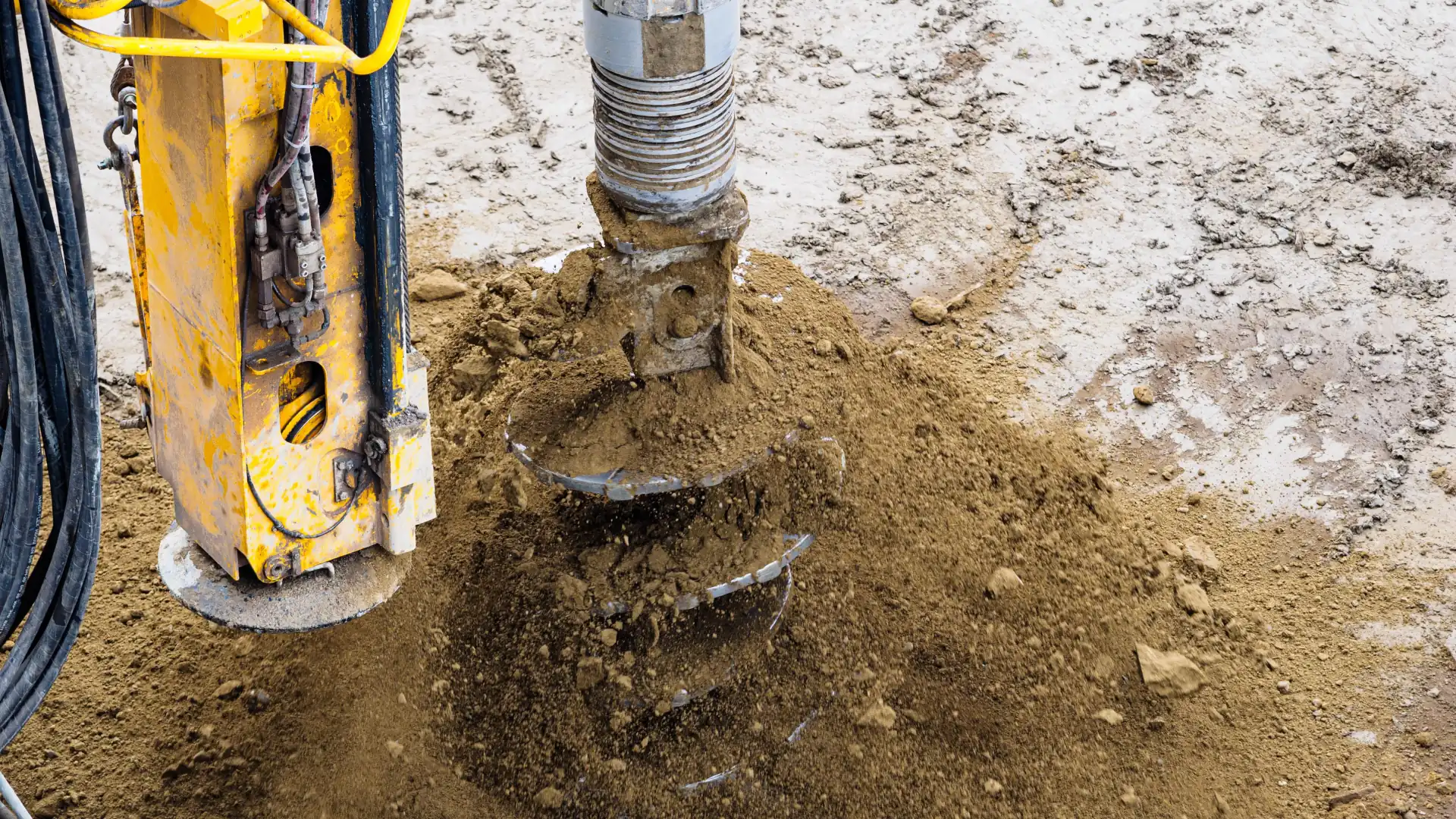
The practical workflow for underground services location in complex Auckland environments looks like this: request Before U Dig service plans; engage a service locator to verify and mark out services on site using electromagnetic locators and GPR; use hydro excavation to physically daylight services in the proposed excavation zone; confirm actual locations against plans; then proceed with mechanical excavation in the confirmed clear zones.
This three-step process: request, locate, daylight, is increasingly the accepted standard of care for excavation near live utilities in urban Auckland. It is also the process most likely to withstand scrutiny in a WorkSafe investigation if an incident occurs.
For a full overview of TSL’s hydro excavation capability and the project types we support, see our Hydro Excavation Services.
A Practical Checklist for Developers and Civil Contractors
Before any excavation near known or suspected underground services in Auckland:
- Submit a Before U Dig request at beforeudig.co.nz and retain the reference number
- Check UtilityFinder for operators not covered by BeforeUDig
- Engage a qualified service locator to physically verify and mark out services on site
- Identify proximity zones where mechanical excavation is not permitted
- Specify hydro excavation or hand digging for all work within those zones
- Document your risk assessment and control measures in writing before work starts
- Brief all excavation personnel on the confirmed service locations before any digging begins
- Have emergency contacts for Vector, Watercare, Firstgas, Chorus, and your relevant electricity distributor on site