
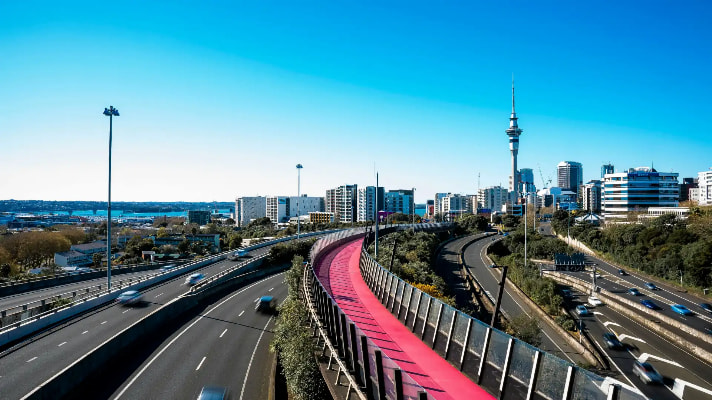
Every year, Aucklanders climb into their cars with roughly the same silent hope: that today will be the day the traffic finally eases up. According to the latest auckland traffic report data from the TomTom Traffic Index 2025, that hope is going to keep getting deferred. In 2025, the average Auckland driver lost 85 hours,which is equivalent tothree days and 13 hours to rush-hour congestion alone. That’s two hours and 33 minutes more than in 2024. We’re not just stuck in traffic. We’re losing more of our lives to it, year on year.
This is TSL’s annual look at what the numbers really mean for commuters, businesses, and the city’s future. We’ll dig into when it’s worst, where it’s worst, and why it keeps getting worse.
The Headline Number: 85 Hours Gone
Let’s put 85 hours into perspective. That’s more than two full working weeks. It’s longer than most Kiwis’ annual leave entitlement. It’s the equivalent of watching every episode of Shortland Street from the last two years – twice.
The TomTom Traffic Index, which draws on anonymised GPS data from hundreds of millions of connected vehicles across trillions of kilometres of road, calculates this figure based on 230 working days of return commutes per year. It measures the extra time lost compared to free-flowing conditions, so 85 hours isn’t your total time in the car. It’s the time the congestion stole from you on top of what your journey should have taken.
The year-on-year jump of 2 hours 33 minutes might sound modest in isolation, but it represents a clear and continuing trend. Auckland’s traffic congestion problem is not plateauing. It is worsening.
For context, Auckland’s average congestion level sits at 42.2%. What this means is that across the road network, journeys take 42% longer than they would under ideal conditions. The average speed across the city during rush hour is just 22.5 km/h. At that pace, you could almost keep up on a bicycle.
Morning vs. Evening: When Is It Actually Worst?
Not all congestion is created equal, and the Auckland rush hour data tells a clear story about which direction of travel hurts more.
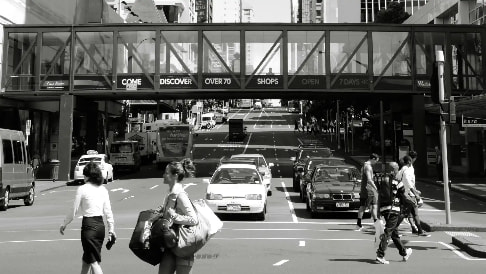
Morning peak (approximately 7–9am)
- Average time to travel 10km: 23 minutes 37 seconds
- Average congestion level: 71.4%
- Average speed: 25.4 km/h
Evening peak (approximately 4–6pm)
- Average time to travel 10km: 26 minutes 40 seconds
- Average congestion level: 86.8%
- Average speed: 22.5 km/h
The evening rush is significantly worse. That 86.8% congestion level at the evening peak means journeys are taking nearly double the time they would in free-flowing conditions. Anyone who has tried to get from the CBD to the North Shore after 5pm on a Wednesday already knows this viscerally.
The TomTom data also reveals a particularly brutal window around 4pm on weekdays, when congestion levels spike to 125% – and the distance you can cover in 15 minutes of driving drops to just 4.5 kilometres. If you’re heading anywhere meaningful in the afternoon, you’re better off leaving before 3pm or after 7pm.
Day-by-Day: The Weekly Rhythm of Pain
Across the week, the auckland traffic time burden is unevenly distributed. And the data shows some patterns worth knowing. Looking at the time required to complete a 10km trip in Auckland:
- Monday: Congestion builds from around 7am, with travel times peaking sharply in the afternoon. A relatively manageable morning eases commuters into the week.
- Tuesday and Wednesday: These are consistently the hardest days. The 4pm window on Tuesday and Wednesday sees some of the highest recorded travel times of the week, pushing close to 29–30 minutes for a 10km trip.
- Thursday: Slightly better than mid-week, but still firmly in “pack-a-snack” territory during the evening peak.
- Friday: Mornings are somewhat lighter as flexible workers take the day or start later. However, early afternoon departures for the weekend compound issues on major routes, particularly the Southern and Northwestern motorways.
- Weekends: Travel times drop noticeably. Saturday and Sunday mornings remain the best time to drive in Auckland. A 10km trip can take as little as 12–13 minutes, compared to double that during Tuesday peak.
The practical takeaway: if you have any control over your schedule, Tuesday and Wednesday afternoons are the times to be anywhere but on the road.
Where It Hurts Most: Auckland’s Congestion Hotspots
While TomTom’s metro-wide figures give us the big picture, ground-level auckland traffic statistics from Auckland Transport’s own road monitoring data paint a stark picture of specific corridors.
Auckland Transport identified February 2025, specifically Friday, 14 February, as the single worst day for congestion across the year, with an average congestion level of 70% and peak readings of 125% by late afternoon.
The city’s most choked corridors during peak periods include:
- Northwestern Motorway (SH16): Congested citybound from Westgate all the way through to Western Springs. This route is a structural bottleneck given the absence of rapid transit options to the northwest, making car dependency near-total for tens of thousands of households.
- Northern Motorway (SH1 North): Heavy citybound congestion between Ōteha Valley Road and Esmonde Road. The Harbour Bridge’s limited lane capacity remains a chokepoint. Three lanes in peak direction for one of New Zealand’s busiest crossings.
- Southern Motorway (SH1 South): Widespread citybound congestion from Manukau right through to Greenlane, with a secondary cluster between Drury, Papakura, and Takanini as the South Auckland growth corridor continues to intensify.
- State Highway 18 (Upper Harbour): Westbound congestion through Greenhithe. A reflection of large numbers of workers commuting from west Auckland toward the job-dense Albany area with few public transport alternatives.
On arterial streets, Auckland Transport’s data for February 2025 found morning peak speeds as low as 8 km/h on Manukau Road/Broadway and Ponsonby Road/Newton Road. On Tī Rākau Drive in East Auckland, one of the region’s fastest-growing corridors, the measured morning travel time for a key section hit 15.72 minutes – the longest of any monitored arterial.
Raleigh Road/Lake Road on the Devonport peninsula averaged 9 km/h during the morning peak – a pace that would embarrass a dawdling pedestrian.
What It’s Costing Auckland
Lost time is lost money, and the auckland commute burden has a very real dollar figure attached to it.
A January 2025 report commissioned by Auckland Mayor Wayne Brown and prepared by EY and ARUP with Auckland Transport estimated that traffic congestion will cost the Auckland economy approximately $2.6 billion per year by 2026. That breaks down into roughly $1.9 billion in direct delay costs and $700 million in macro-economic drag.
That same report estimated the average Aucklander will waste more than 17 hours per year stuck in traffic. A figure that, combined with TomTom’s 85-hour rush-hour figure (which measures a standard commuter’s experience over 230 working days), illustrates that the burden lands hardest on those who have no choice but to drive at peak times.
For businesses, the implications are significant. Freight operators face fewer deliveries per driver per day. Trades and service businesses lose billable hours to windscreen time. And workers who commute by car are absorbing a hidden productivity tax that doesn’t show up on any payslip but shows up everywhere in quality of life.
Earlier research from the New Zealand Institute of Economic Research (NZIER) found that if Auckland’s road network could operate at its designed capacity during weekdays, the city’s economy would benefit by close to $3.5 million per day. That’s the opportunity cost of the gridlock – a daily loss that compounds silently year after year.
Why Is It Getting Worse?
The reasons behind Auckland’s deepening congestion problem are structural, not incidental. Understanding them matters for anyone hoping the situation will improve on its own. (It won’t.)
Population growth concentrated in the wrong places. Statistics NZ data shows that Auckland continues to grow most rapidly in its outer southern, northern, and western fringes. At the same time, approximately 42% of residential land within 5km of the city centre sits under restrictive character protections that limit intensification. The result: more people living further from work, dependent on cars and motorways, with no rapid transit alternative.
Public transport gaps in key corridors. The Northwest is the clearest example. Tens of thousands of households between Westgate and Henderson have minimal rapid transit options, making the Northwestern Motorway a near-mandatory commute route. Similar gaps exist in parts of South Auckland and the North Shore beyond Albany.
Post-COVID rebound in vehicle kilometres travelled. Remote work softened congestion significantly in 2020–2022. The return to office, even partially, has driven vehicle numbers back toward and beyond pre-COVID levels on key corridors.
Rising population overall. Auckland’s population grew by approximately 1% in the year to June 2025, according to Statistics NZ. More people means more vehicles, even accounting for modest increases in public transport patronage.
Infrastructure lag. Road capacity investment has not kept pace with demand growth. Meanwhile, public transport expansion, including City Rail Link, which will dramatically improve central Auckland access, is still in the process of delivering its full benefits.
The Policy Horizon: Is Relief Coming?
There are genuine reasons for cautious optimism, but the timeline is long.
Time of Use Charging is the most significant policy lever under active development. In late 2024, Parliament released draft legislation enabling Auckland Council to propose congestion charging schemes. As of mid-2025, Auckland Council had submitted its position on the bill, emphasising the importance of local decision-making and ring-fencing any revenue for complementary transport investment. If legislation passes and a scheme is implemented, overseas evidence from London and Stockholm suggests that even modest peak-hour pricing can meaningfully reduce congestion levels.
City Rail Link (already operational for its first phase) will continue to reshape commute patterns for central and inner-west Auckland as its full network benefits are realised. Faster, more frequent rail will provide a genuine alternative to driving for many currently car-dependent commuters.
Motorway network improvements continue to be progressed by NZTA, though major capacity additions take years from planning to delivery.
The honest assessment: meaningful relief is at least three to five years away, and only if policy settings and investment decisions align. In the meantime, Aucklanders will keep losing those hours.
What You Can Do Right Now
While the city works through its structural challenges, the data does point to some practical strategies for individual commuters:
- Avoid the 4pm–6pm window if at all possible. This is consistently the worst period across all weekdays.
- Tuesday and Wednesday afternoons are the hardest days on the network. If you can shift travel to Monday morning or Friday afternoon, you’ll notice a real difference.
- February is Auckland’s peak congestion month – consistently recording the highest monthly congestion levels of the year. If you can front-load flexible travel or remote work options, February is the time to use them.
- Arterial streets can be worse than motorways during peak periods. Surface roads like Ponsonby Road, Manukau Road, and Lake Road can slow to walking pace. Local knowledge and route flexibility matter.
- Plan around the data, not the clock. Leaving at 7am instead of 8am can cut your travel time by 40% on many routes.
Sources
| Data Point | Source |
| 85 hours lost; 2h 33min increase on 2024; congestion level 42.2%; rush-hour speed 22.5 km/h; morning/evening peak breakdown; 4pm spike to 125%; worst day 14 Feb 2025; day-by-day and hourly travel times; monthly congestion levels $2.6 billion annual congestion cost; $1.9b delay costs; $700m macro-economic costs; 17 hours lost per person per year $3.5 million daily economic benefit if network ran at designed capacity Road-specific speeds: 8 km/h Manukau Rd/Broadway & Ponsonby Rd; 9 km/h Lake Rd; 15.72 min Tī Rākau Drive Motorway corridor congestion patterns (Northwestern, Northern, Southern, SH18) 42% of central residential land under character protections; outer-fringe growth patterns ~1% Auckland population growth to June 2025 Time of Use Charging legislation and policy status | TomTom Traffic Index 2025 – Auckland Auckland’s Cost of Congestion, EY/ARUP/Auckland Transport, January 2025 NZIER, Benefits from Auckland Road Decongestion Auckland Transport road monitoring (February 2025), reported by NZ Herald, March 2026 Greater Auckland congestion analysis; Auckland Transport network data The Spinoff, November 2025; Statistics NZ Subnational Population Estimates, June 2025 AA/NZ Herald, February 2026 Auckland Transport – Time of Use Charging, 2025 |
A Note on Methodology
The figures in this report draw on the TomTom Traffic Index 2025, which is based on anonymised GPS probe data collected from connected vehicles across more than 3.65 trillion kilometres of road globally. The “hours lost” figure represents the additional time spent in peak-hour traffic over 230 working days of return commuting compared to free-flow conditions.
Congestion cost estimates are drawn from Auckland’s Cost of Congestion (January 2025), prepared by EY and ARUP with Auckland Transport support.
NZIER economic benefit estimates are sourced from published NZIER research on Auckland road decongestion benefits. Road-specific congestion data is sourced from Auckland Transport’s monitoring of February 2025 peak periods, as published by the New Zealand Herald (March 2026).
TSL will update this report annually as new TomTom Traffic Index data becomes available.
About TSL
Traffic Systems Limited (TSL) has been keeping New Zealand moving since 1994. From traffic signals and smart infrastructure to civil construction, asphalt, and traffic management, TSL provides the full spectrum of services that make Auckland’s roads safer and more efficient. If your organisation is grappling with the consequences of congestion – from site access to traffic management planning. Get in touch with our team.For media enquiries or to republish data from this report, please contact TSL directly.